
Buildings under construction are at their most vulnerable to fire. Fire compartments are incomplete, permanent detection is not yet working, and there is often a mix of hot works, combustible materials and temporary electrics. This guide covers the main risks, who is responsible, what a site fire safety plan includes, and how temporary fire alarms and detection fit in.
- Main risks: hot works, combustible materials and waste, temporary electrics and fuels
- Who is responsible: the principal or main contractor, through a site fire safety plan
- Warning and detection: a temporary fire alarm with manual call points, detection and sounders
- Common gap: alarms and escape routes that are not extended as the building grows
Why fire safety on site is different
A finished building relies on fire compartments, fire doors, sprinklers and a permanent fire alarm. During construction most of these are missing or not yet working, while the site itself is full of ignition sources and fuel. Escape routes change as the work progresses, and people may be working at height or deep inside the structure.
Who is responsible for fire safety on site?
The principal or main contractor is responsible for fire safety on site. In Great Britain, the Construction (Design and Management) Regulations 2015 require steps to prevent the risk of fire, provide emergency routes and exits, and provide fire detection and firefighting equipment where needed. HSE guidance HSG168, Fire safety in construction, and the Joint Code of Practice on fire prevention on construction sites give more detail. Northern Ireland and the Republic of Ireland have equivalent construction regulations.
What a site fire safety plan covers
- Assess the fire risksIdentify ignition sources, combustible materials and the people at risk, and review this as the site changes.
- Control hot worksUse a permit system for welding, cutting and grinding, with fire watches before and after the work.
- Manage materials and wasteKeep combustible materials and waste to a minimum, store them safely and remove waste regularly.
- Keep escape routes clearPlan escape routes and assembly points, with signage and emergency lighting, and update them as the building changes.
- Detect fire and raise the alarmInstall a temporary fire alarm with manual call points, detection where needed and sounders that can be heard across the site.
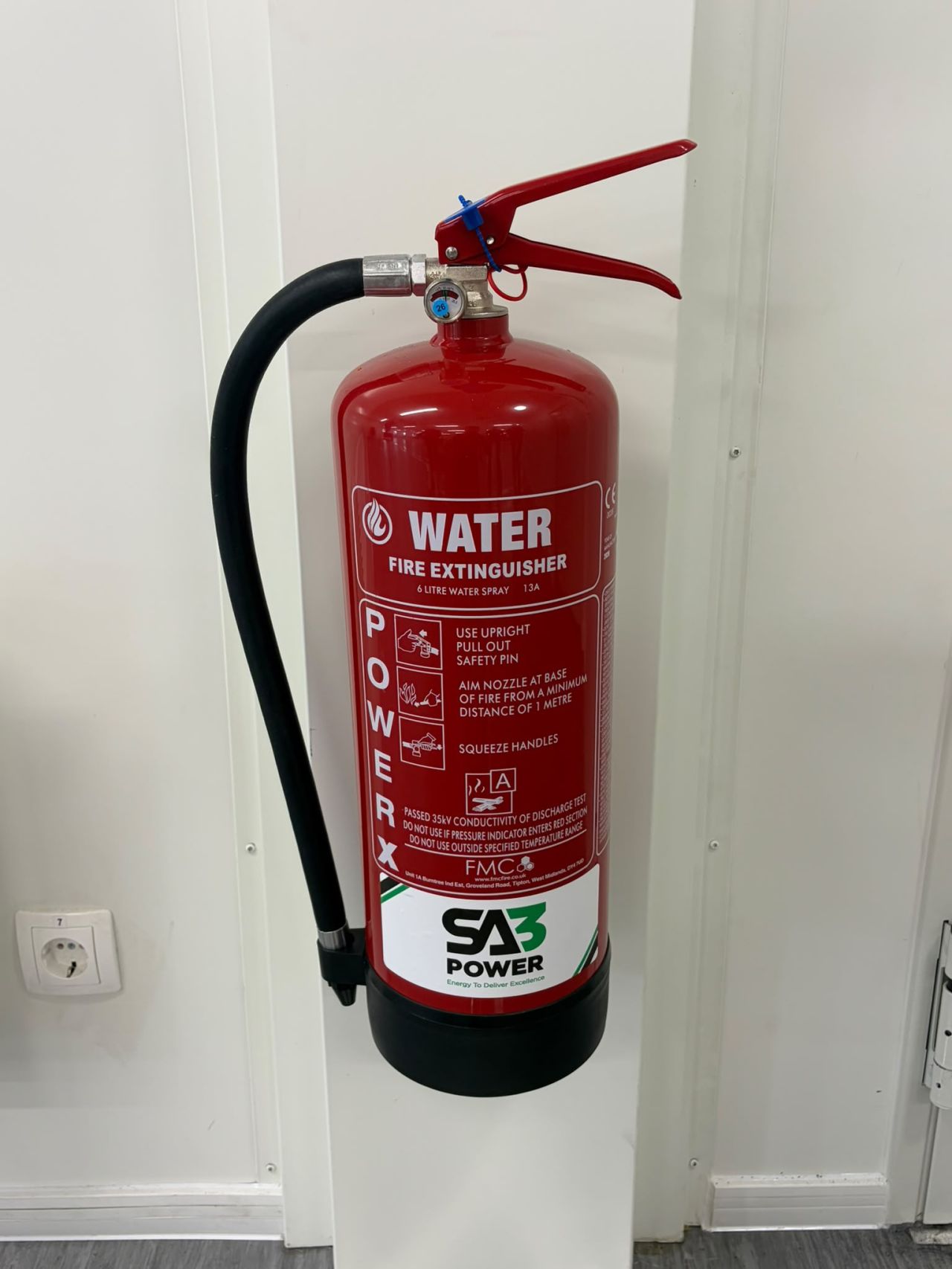
- Provide firefighting equipmentPlace suitable extinguishers at fire points and near hot works, and keep them checked.
- Train and drillCover fire safety at induction and run regular evacuation drills.
Temporary fire alarms and detection
A temporary fire alarm gives everyone on site an early warning. Wireless systems are well suited to construction because call points, detectors and sounders can be added and moved as the building grows without running new cables each time.
A typical system combines manual call points at fire points, exits and stair cores, smoke or heat detection in higher-risk areas such as site accommodation and storage, and evacuation sounders. Monitoring the system means an alarm is picked up and acted on even when the area is unoccupied.
Temporary electrics and fire risk
Overloaded, damaged or poorly installed temporary electrics are a common cause of fire on site. The temporary installation should be designed and certified to BS 7671 in the UK or I.S. 10101 in the Republic of Ireland, protected correctly, and inspected and tested throughout the build, with PAT testing of portable equipment.
Keeping fire safety current
The fire safety plan, alarm coverage, escape routes and emergency lighting all need to keep pace with the build. Each new floor, stair or enclosed area changes the risk, so reviews should be built into the programme rather than left to chance.
How SA3 Power helps
SA3 Power installs temporary fire alarm systems with wireless manual call points, smoke detection and evacuation alarms, monitored from our own monitoring room, alongside the temporary power, lighting and security for the site. See temporary site services and construction site CCTV and remote monitoring.
Related reading
- Construction site lighting
- Construction site security
- Temporary site power: a practical guide
- Core Value 01: Safety First
Quick answers
Does a construction site need a fire alarm?
Yes. Sites need a way to detect fire and warn everyone on site. On most sites this is a temporary fire alarm with manual call points, detection where needed and sounders that can be heard across the site.
Who is responsible for fire safety on a construction site?
The principal or main contractor, through a site fire safety plan. In Great Britain the CDM Regulations 2015 apply, and Northern Ireland and the Republic of Ireland have equivalent construction regulations.
Why use a wireless fire alarm on a construction site?
Wireless call points, detectors and sounders can be added and moved as the building grows without running new cables each time.
Does SA3 Power provide temporary fire alarms?
Yes. SA3 Power installs temporary fire alarm systems with wireless manual call points, smoke detection and evacuation alarms, and monitors them from its own monitoring room.
About SA3 Power: Founded in 2017 and headquartered in Kildress, near Cookstown, County Tyrone, SA3 Power is an electrical contractor delivering temporary site power, data centre electrical installations and offsite prefabrication for construction and mission-critical projects across Ireland, the UK and mainland Europe, with offices in London, Amsterdam and Frankfurt.
Planning fire safety for a new site? Request a quote or call 028 8675 2129.